Most people think ENS names are just easier wallet addresses, but they've become much more than that. From payments and identity to communities, brands, and internet culture, here are seven ways people are already using ENS onchain today.
There are people who buy an ENS name, put it in their Twitter display name, admire it for three days, and then never touch it again.
This article is not for them.
Because ENS names were never meant to be decorative. Some people use them to get paid. Some use them to run communities. Some use them to manage contributor networks, build onchain reputations, raise funds during crises, or turn a brand into something people can interact with directly on Ethereum.
ENSv2 will push that even further with more flexible namespaces, programmable registries, and infrastructure designed for a much broader internet than the one we launched into years ago.
But before we get there, here are seven ways frENS are already using ENS onchain.
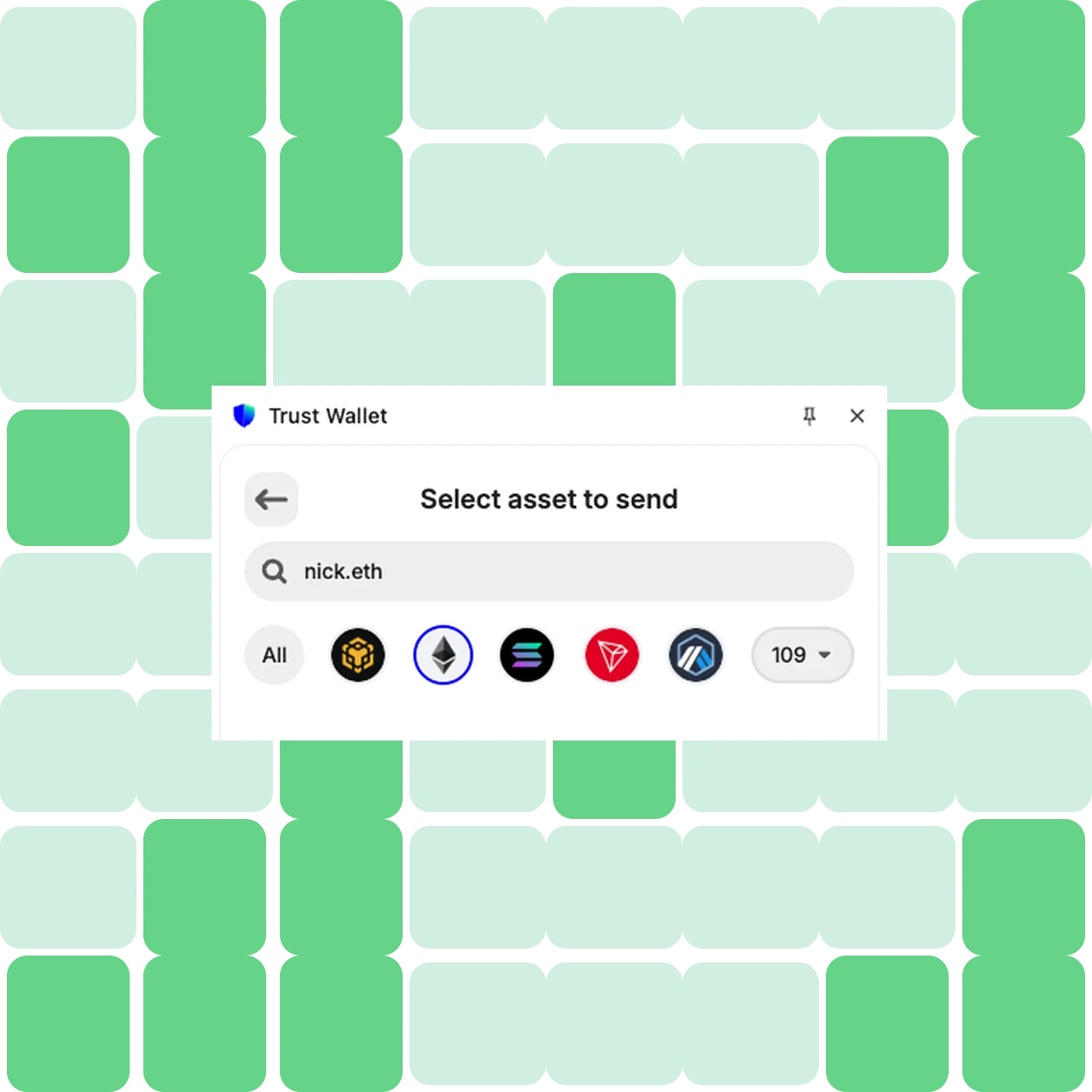
Your ENS name can make getting paid feel a lot less like copying the long, convoluted password of a wifi router.
Instead of sending someone a 42-character wallet address and praying they don't miss a digit, you can share xyzcompany.eth and receive crypto directly to the address it resolves to. That makes ENS useful for invoices, contributor payments, DAO reimbursements, grants, and any situation where "send it to 0x…" feels like a liability.
For teams, this can get even more useful with subnames. A community or DAO can issue names to contributors, local chapters, or working groups, then use those names as a readable payment layer.
ENS is also useful for everyday wallet admin.
Need to move funds from one wallet to another? Send to your ENS name. Need to separate your cold wallet, hot wallet, trading wallet, and "why did I mint this?" wallet? ENS gives you a readable way to organize the chaos.
A name can point to different addresses across different coin types too, which means it can become a simple interface for managing where money should go, without forcing people to remember which wallet is which.
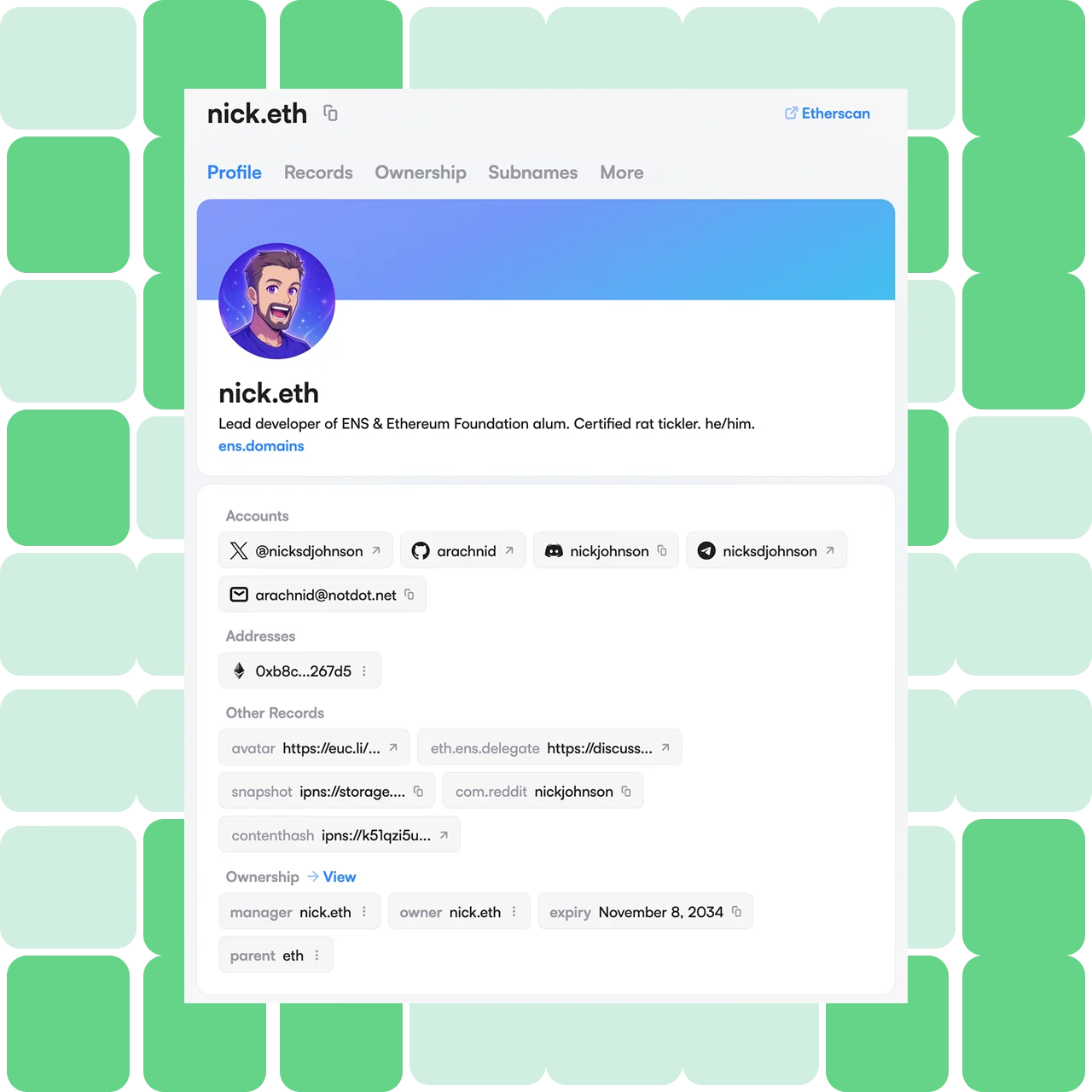
An ENS name isn't just where money gets sent. It's also how people recognize you onchain.
You can connect your name to your wallet, avatar, website, social links, and other records that help make your address feel less like a random account and more like you. Reverse resolution also lets apps display your ENS name instead of your wallet address, which is why yourname.eth shows up across wallets, explorers, NFT platforms, and apps that support ENS.
In other words, ENS gives your onchain activity a face, a name, and a little less spreadsheet energy.

Communities love a shared identity. ENS brings that identity to life onchain.
A project, DAO, creator, or community can use subnames to give members names under a shared namespace. That could look like alice.community.eth, events.community.eth, contributors.community.eth, or anything else that makes sense for the group.
Subnames can be used for membership, coordination, reputation, access, or just making everyone feel like they belong to the same corner of the internet.
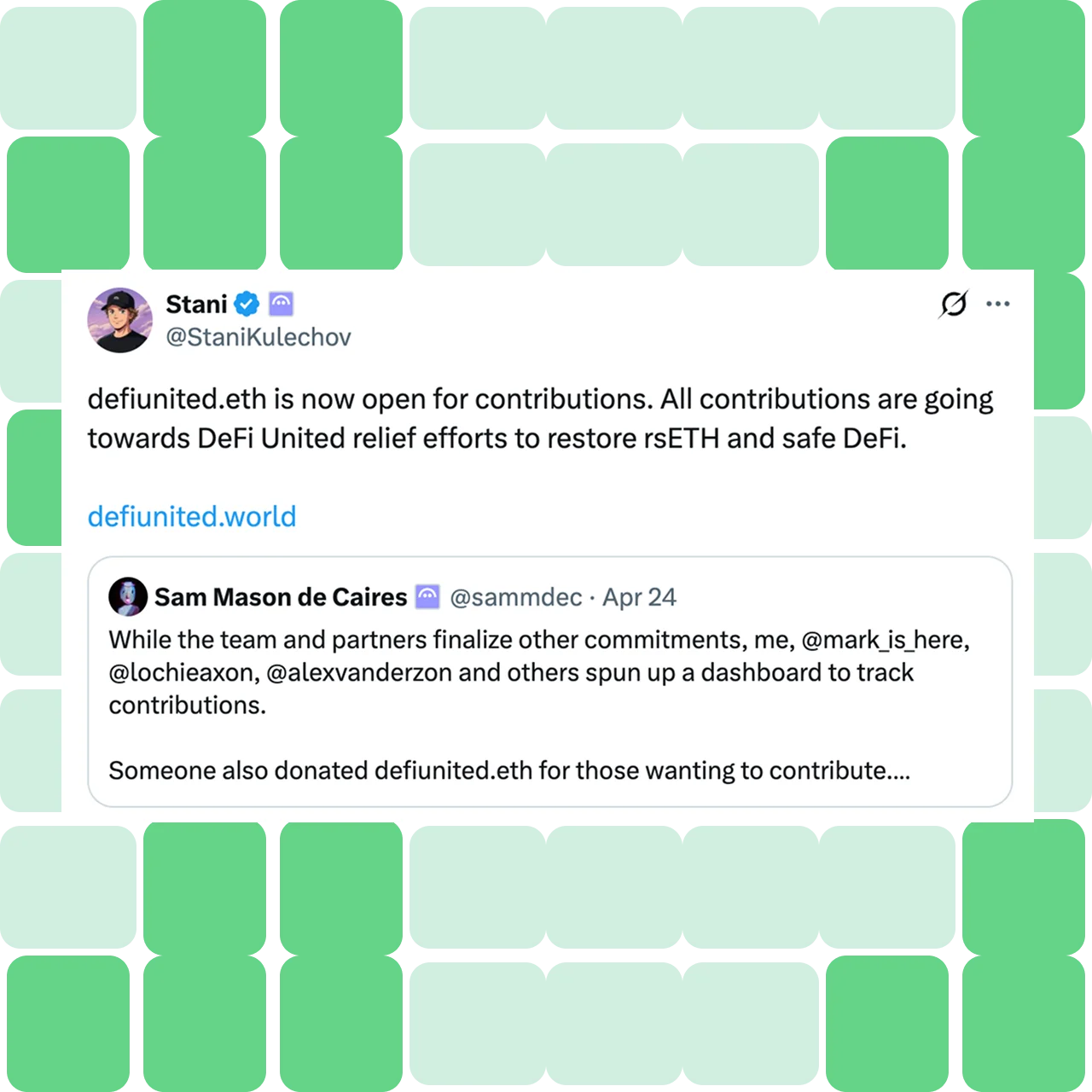
If people are going to donate onchain, they need to trust where the money is going.
ENS names can help make donation addresses more readable, shareable, and recognizable. Instead of asking people to verify a long wallet address during a crisis or campaign, a name like cause.eth can become a clear destination for funds.
This has mattered in real moments, from Ukraine donations to COVID relief efforts to crypto-native community fundraisers. The use case is simple: make the destination easier to remember, easier to share, and harder to confuse.

Brands have always cared about names. ENS just brings that logic onchain.
A brand's ENS name can act as its onchain home, payment address, identity marker, and public signal.
Over the years, major brands, athletes, celebrities, and companies have experimented with ENS names. Some use them as part of social campaigns. Others use them for wallet visibility, NFT activations, or simply staking a recognizable presence on Ethereum.
For companies, creators, and public figures, an ENS name can become a recognizable anchor across wallets, apps, campaigns, and communities.
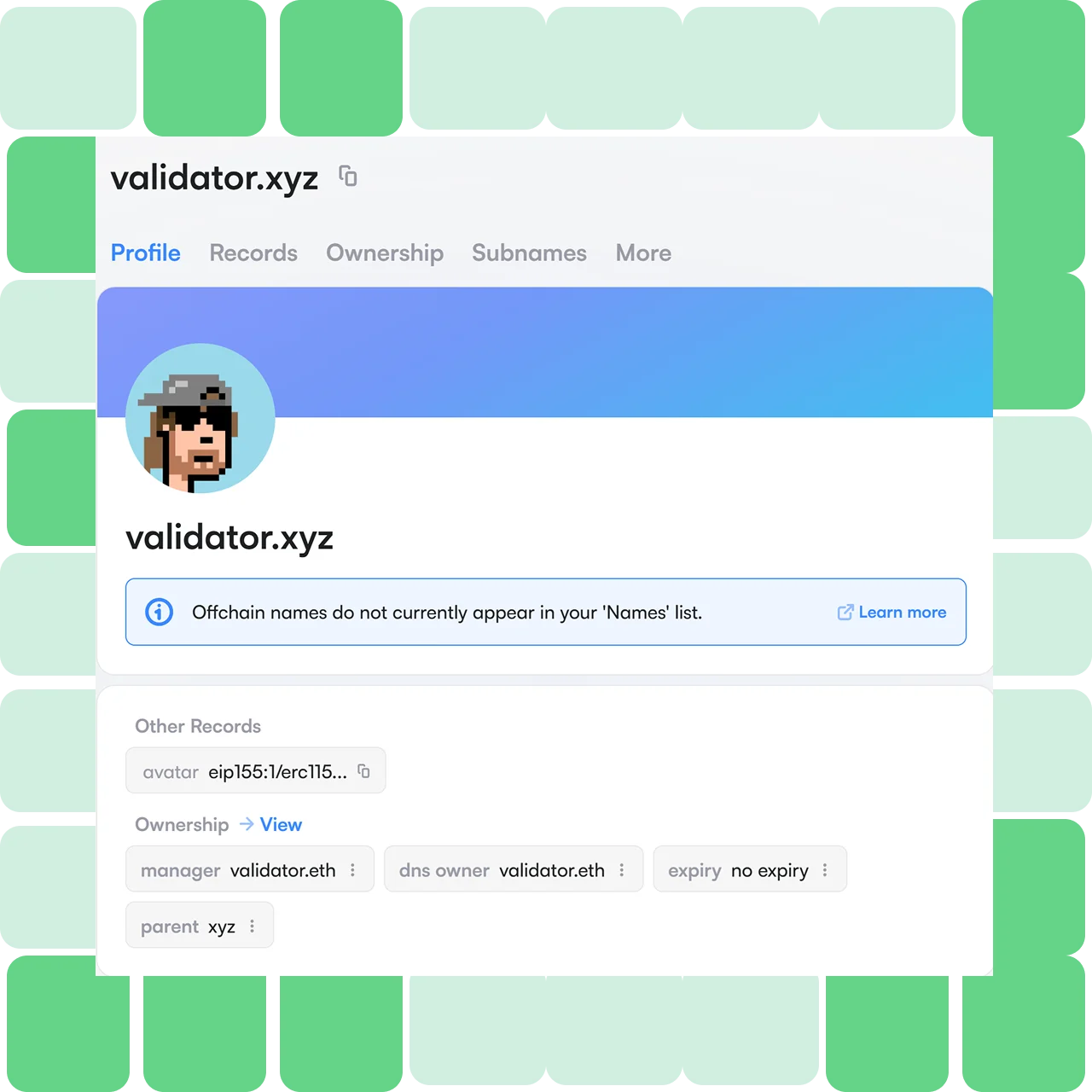
Already have a website? You may not need to start from scratch.
ENS lets owners of existing DNS names bring those names into ENS. That means a traditional DNS domain can also function as an ENS name, connecting an existing web presence to Ethereum-based identity and resolution.
In practice, this means someone with a .com domain can use that same name across wallets, apps, profiles, and onchain systems without abandoning the identity they already built on the web.
It's one of the clearest examples of ENS serving as essential infrastructure across the existing internet and the onchain one. You can learn more by visiting our docs.
The internet forgets things fast.
Accounts get deleted. Platforms die. Usernames disappear. Entire communities migrate every few years to whatever app everyone suddenly pretends they always loved.
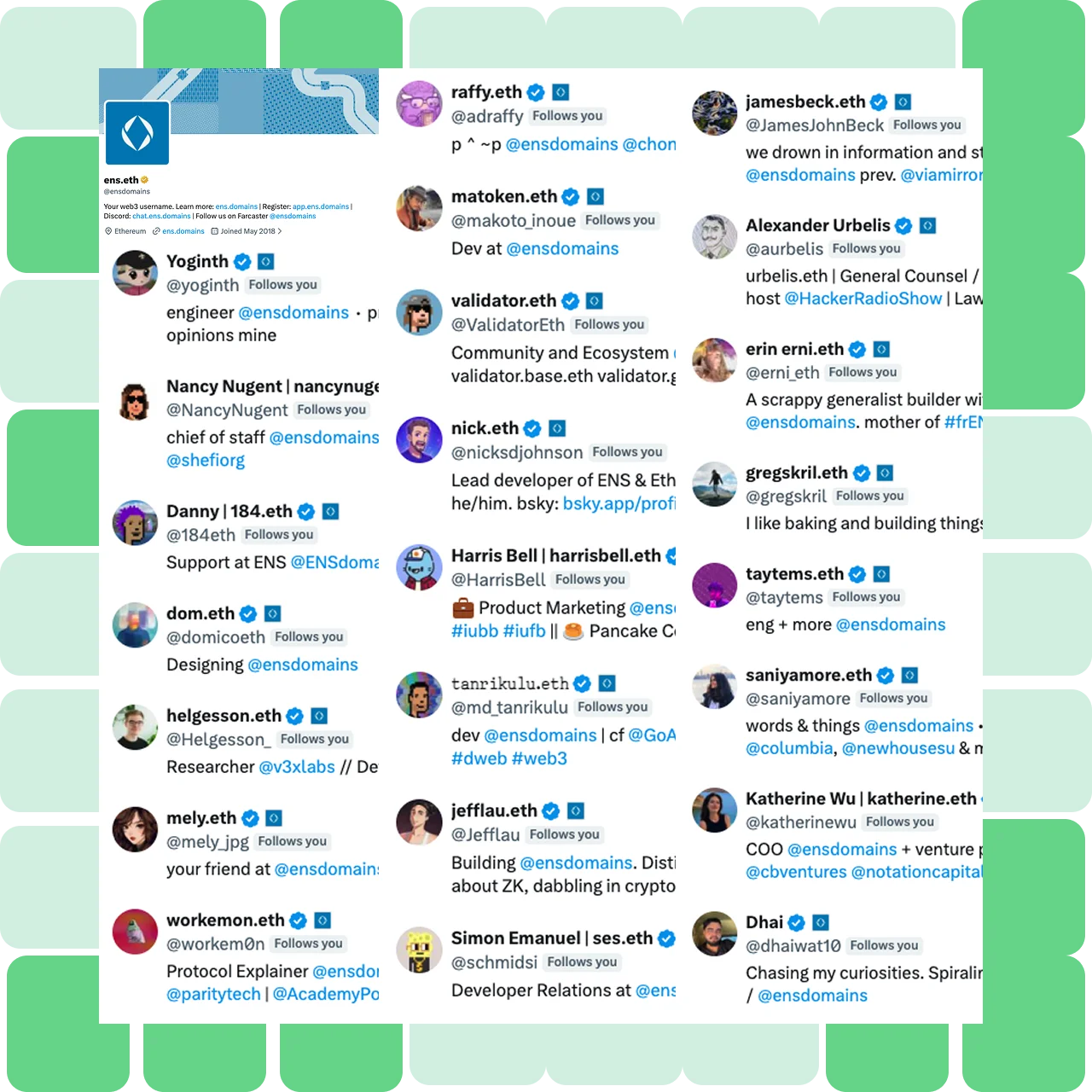
ENS names feel different because they aren't tied to a single platform. People have used them for years as internet homes, digital signatures, collector identities, community status symbols, and long-term online personas that move across apps instead of being trapped inside one.
Some people put them in bios. Some put them on merch. Some use them at conferences instead of real names. Some build entire online identities around them.
And that's usually when the shift happens.
An ENS name starts as a convenience. You get tired of copying wallet addresses. You want your profile to look cleaner. You want people to send funds to yourname.eth instead of a wall of hexadecimal characters.
Then, over time, the name becomes something more powerful.
It becomes the identity tied to your wallets. The namespace tied to your community. The payment layer tied to your work. The thing people recognize you by across apps, wallets, websites, and onchain spaces.
ENSv2 expands this even further. More expressive ownership models, reusable namespaces, programmable permissions, and interoperable identity infrastructure all push ENS toward something much larger than a naming system.
But even now, your ENS name can already do far more than you think.