To celebrate ENSv2, eligible users can claim a personalized generative art trading card shaped by their history with ENS.
Some ENS names take weeks to choose. Others begin with "wait, that's still available?" and a quick decision. However you found yours, it might have become the name your friends recognize you by, or the first of more registrations than you originally planned.
To celebrate the upgrade to ENSv2, we're giving that history the trading card treatment.
The ENSv2 commemorative collection lets eligible users reveal and claim a personalized generative art NFT after completing their name upgrades in the ENS App.
Your ENS history helps determine the design, right down to details you might need to look twice to notice.
We worked with generative artist Simon Alexander-Adams, also known as Polyhop, who built a system that turns ENS data into artwork. Across the collection, you'll find bright, unusual color combinations, intricate patterns, and edges that look like they've spent years in someone's prized card collection. Those differences have something to tell you about the history behind each card.
Five traits – Era, Depth, Gasveteran, Archetype, and Rarity – help determine what you receive. Before you reveal yours, here's how to read it.
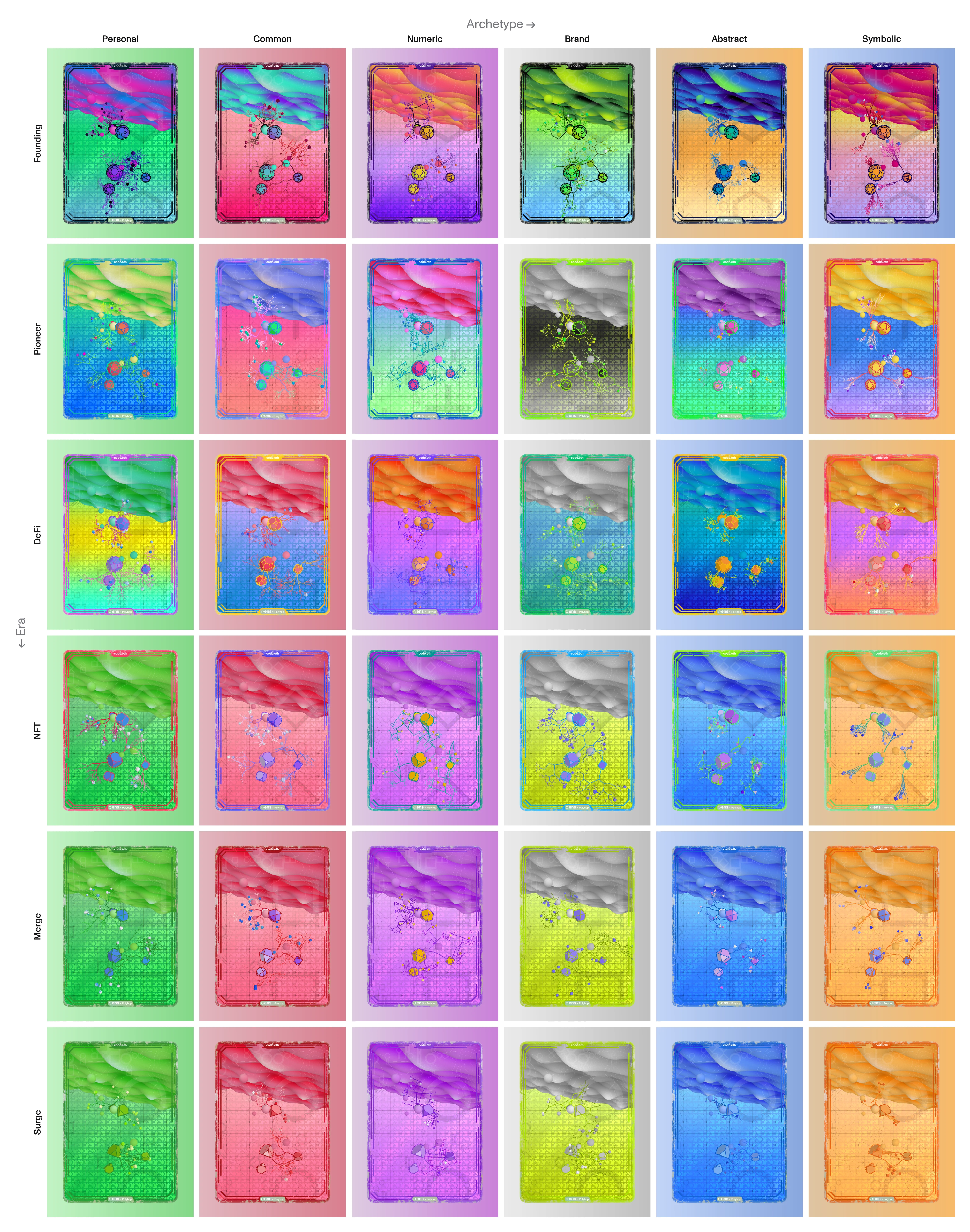
Era reflects the period of ENS history associated with your .eth name, while Archetype describes the broad category of its name, such as a personal name, a common word, or a number. Simon combined the two into 36 color palettes, giving each combination its own treatment.
Names registered in earlier eras introduce increasingly complex palettes. For some of the earliest histories, Simon deliberately broke the rules he'd established elsewhere in the collection, bringing in inverted colors and unexpected contrasts. There's a reason those cards look a little different from their neighbors.
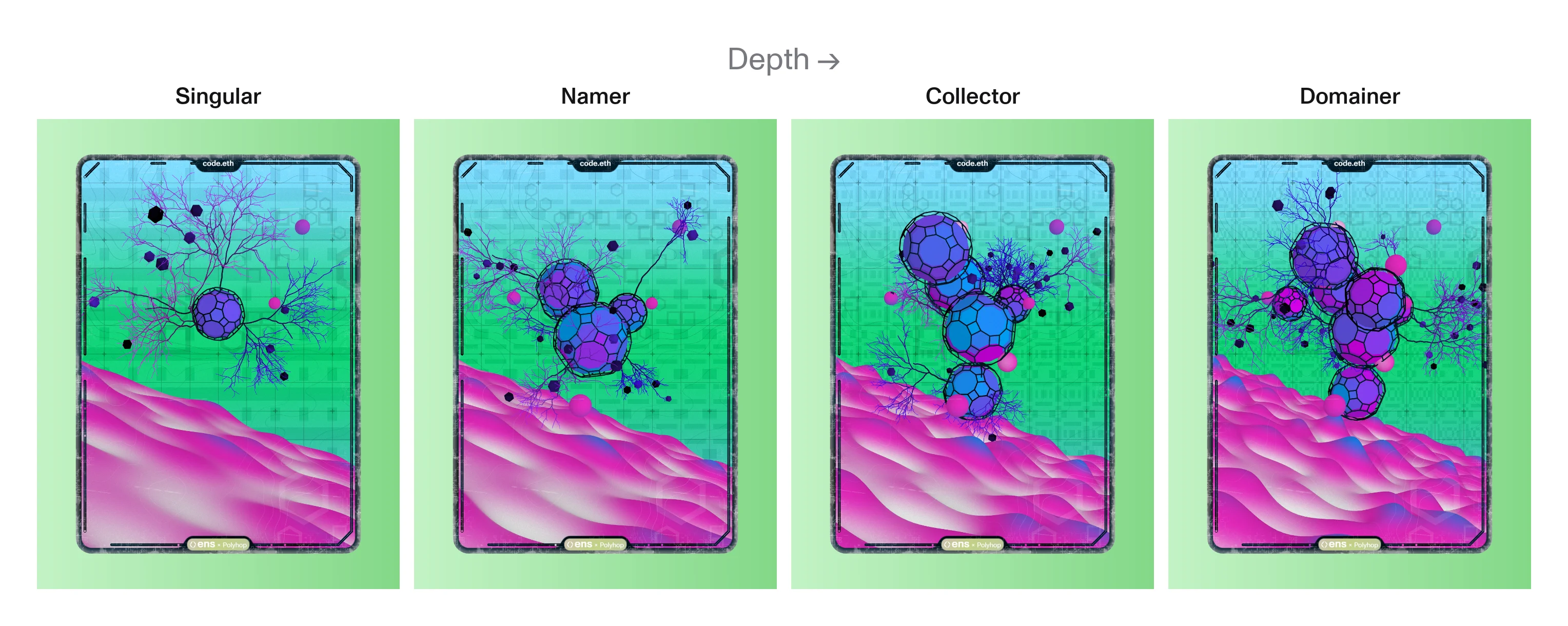
Depth reflects the number of ENS names held by your address at the snapshot. It influences the density of elements in the artwork, so a larger collection can produce a busier card. Your habit of registering "just one more" might be quite visible here.
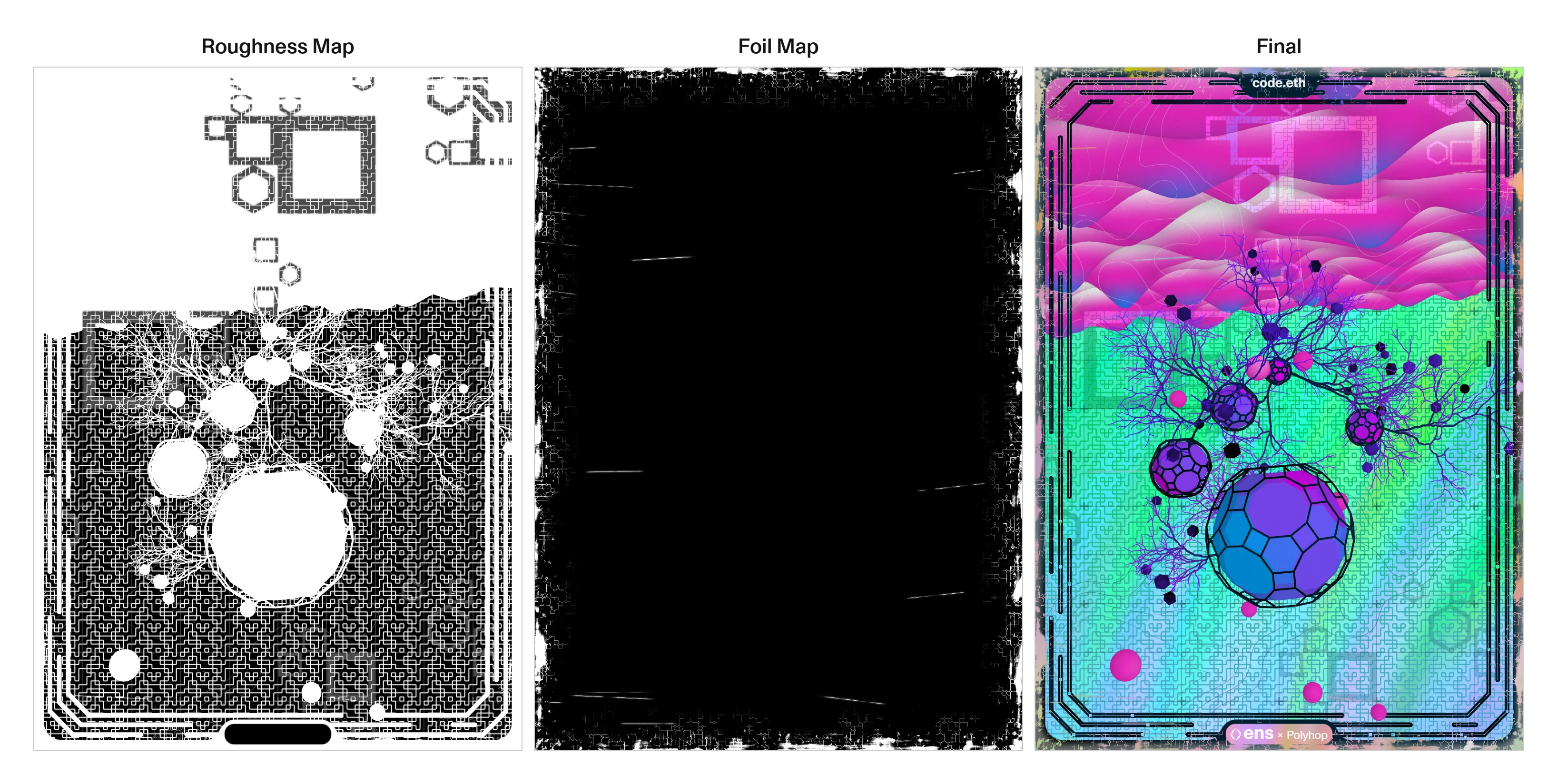
Gasveteran gives cards different degrees of wear, from fresh to battle-scarred. Look closely and you may see circuit-like patterns beneath the surface. On cards with holographic treatments, wear can expose foil along the edges, much like a physical trading card that's been handled over the years. Simon spent a considerable amount of time getting those details right, so they're worth a closer look.
This is based on the length of the name label, excluding .eth: three characters are Elemental, four are Rare, five are Uncommon, and six or more are Common. Rarity also influences the card's finish, including holographic treatments.
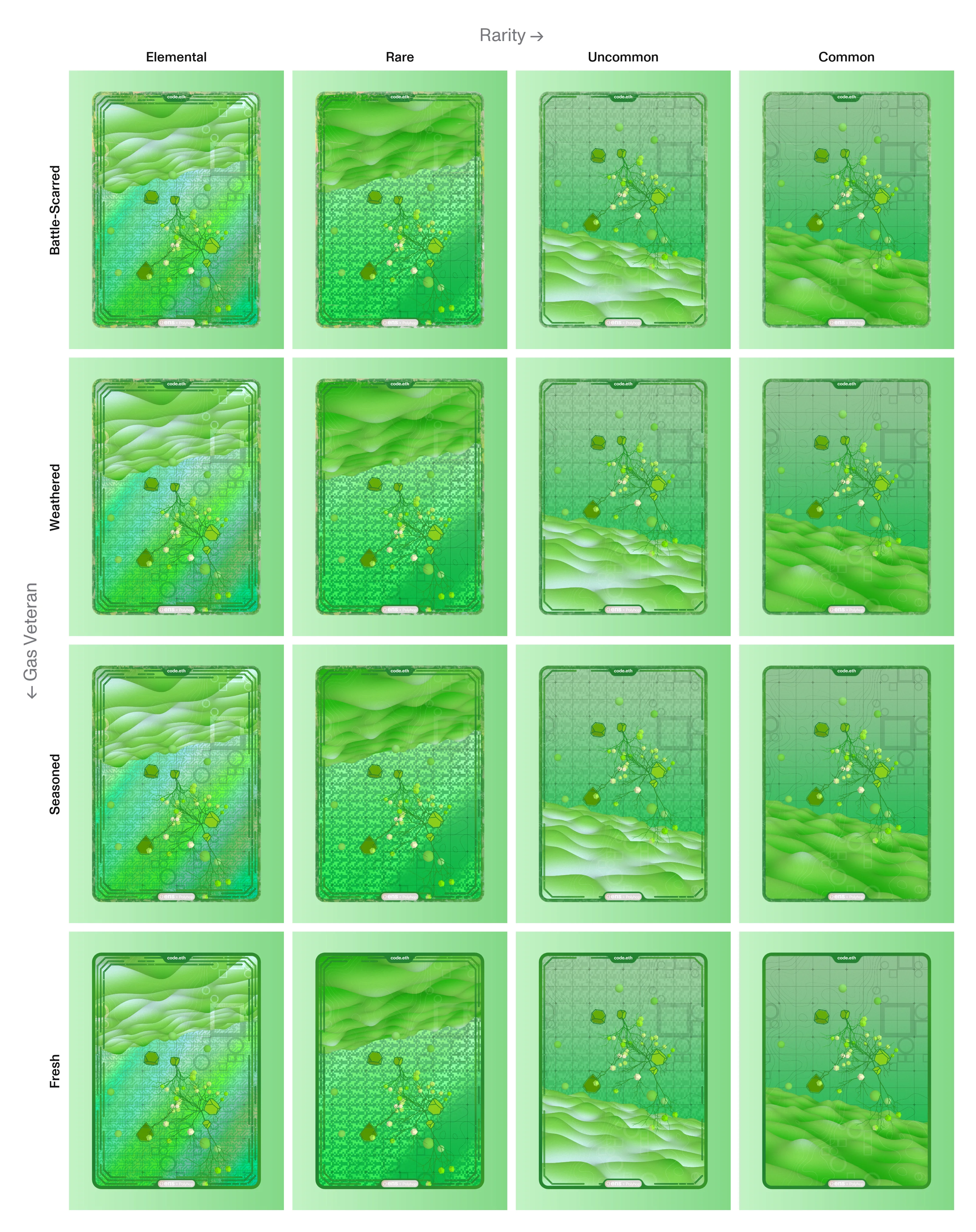
Four-by-four grid of green cards comparing Elemental, Rare, Uncommon, and Common rarity tiers across four levels of wear.
The traits work together with a fixed seed that provides further variation within Simon's design. Your card is determined by the snapshot data, so refreshing the page or claiming later won't give you a different version. Minting earlier doesn't change its artwork or rarity.
Eligibility comes from a June 1, 2026 snapshot, with one NFT per eligible address. An address with several names receives a single card.
In the ENS App, your card is revealed once you've upgraded all the eligible names to ENSv2. Expired names and other names that can't be migrated won't hold up the reveal.
The displayed name comes from the snapshot data: your primary name, or the name the address has held longest if no primary name was set..
Once you've completed your name upgrades, you can explore your card in the app before deciding whether to claim it. Tilt it to see how the artwork responds, look over its traits, and decide whether you'd like to mint it to your wallet.
Minting is optional, and you pay the Ethereum network gas fee for the claim transaction. You can claim immediately or come back later; completing your upgrade doesn't commit you to minting the NFT.
A protocol upgrade doesn't usually leave you with something you'd send to a friend. We thought this one should. ENSv2 is a milestone we get to celebrate together, and these cards are our way of making that celebration personal.
You might be here with one name you've renewed faithfully for years, or a collection that takes a little longer to explain. We're glad you're bringing them with you.
When you're ready, open the ENS App and complete your name upgrades. If your address is eligible, you'll be able to reveal your card and choose whether to mint it. Take a good look, compare it with a friend's, and show us what you got.