
The ENS Explorer gives users and builders a clearer way to inspect how ENS names actually work. It surfaces control, resolution, history, and other protocol context that helps make ENS easier to understand and navigate.
When we first introduced the ENS Explorer, we described it as a new way to inspect names, contracts, and protocol data across ENS.
That was true, but it only told part of the story.
The ENS Explorer exists because ENS as a protocol has outgrown the kind of interface that can only simplify things. As ENS becomes more flexible, more expressive, and more powerful, it also becomes harder to fully understand from a simple management interface alone.
That's not a bad thing. But it does mean ENS needs a place where more of that complexity can be surfaced properly. A place where users, builders, and researchers can see what is happening under the hood, inspect how names are configured, and trace the relationships that make ENS work.
That is what the ENS Explorer is for.
The ENS Explorer provides the source of truth for ENS, empowering technical users to explore, build, and innovate with confidence.
Before the split, ENS had one product trying to serve too many different users at once.
For most people, ENS should feel straightforward. Registering a name, updating records, setting a primary name, and managing a profile should not require understanding protocol internals. That is what the App is for, and it is what it should continue to do well.
But there has always been another side of ENS too.
Some users do not just want to make simple changes. They want to understand how a name works. They want to know who controls it, what it resolves to, how it is configured, what has changed over time, and what contracts or permissions sit behind it.
As ENS has evolved, those questions have only become more important.
Trying to serve both of those audiences in one interface created tradeoffs. In practice, it meant the old app often had to smooth over protocol terminology, hide technical context, or leave out information that power users and builders actively needed.
That made the experience simpler for some users, but it also meant ENS never really had a proper home for inspection, debugging, and deeper exploration.
The Explorer changes that.
It gives ENS a dedicated surface for visibility and discovery, without forcing every user to navigate that complexity in the App.
One of the simplest ways to think about the ENS Explorer is as a source of truth for ENS.
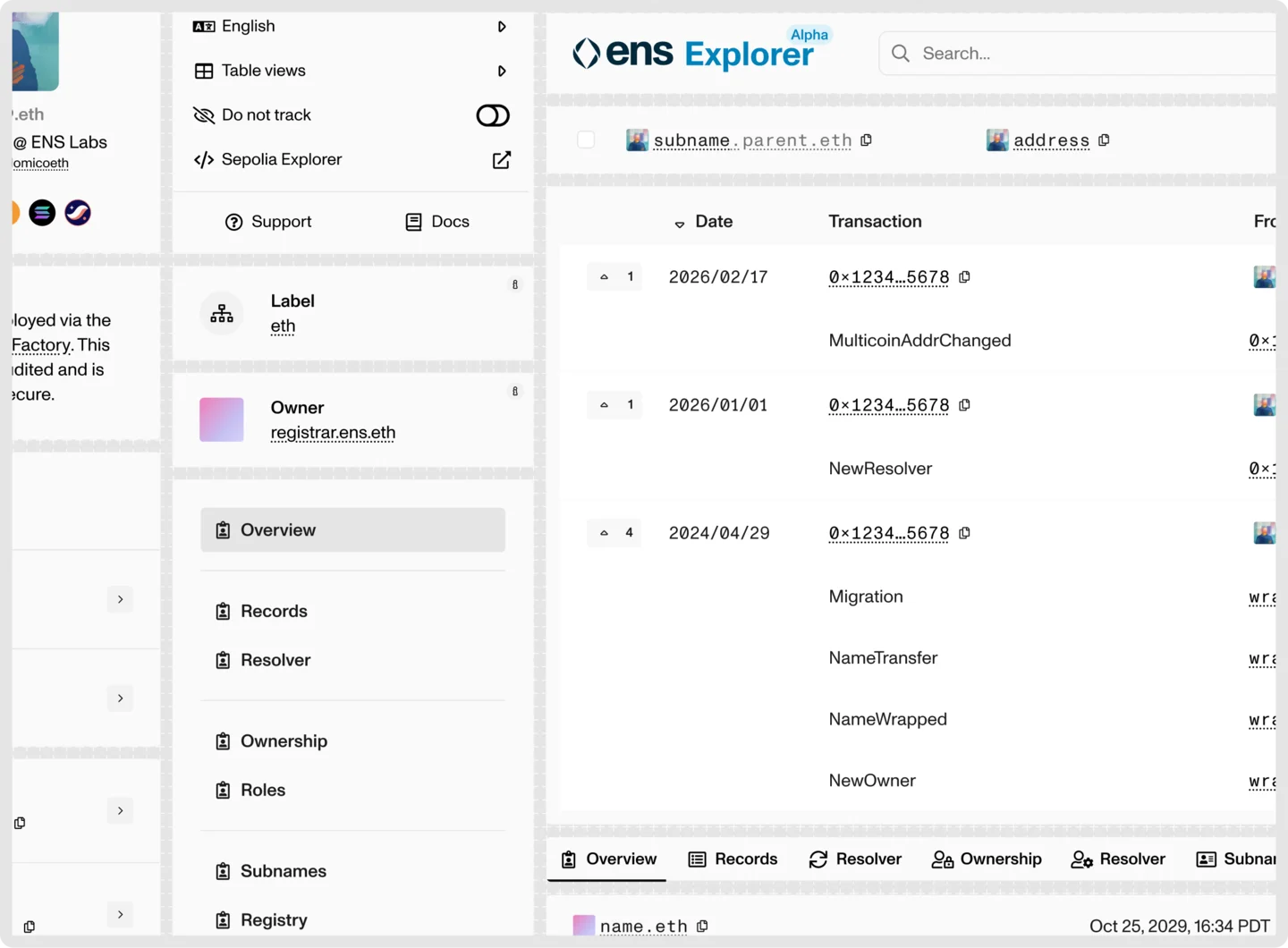
Not in the sense that it replaces the protocol itself, but in the sense that it is designed to surface ENS more completely.
That means it does not need to abstract away as much. It can show more of the protocol directly, use more accurate terminology, and expose the kinds of information that are often essential for understanding how a name actually behaves.
That distinction matters.
As ENS becomes more flexible and more powerful, people need to be able to inspect it with confidence. They need to see more than a polished surface. They need context.
That could mean checking the history of a name. It could mean understanding what resolver is being used. It could mean tracing how a record is resolved, looking at token or label hash information, or inspecting the contract relationships behind a specific setup.
Those are not edge cases. They are part of what it means to interact with a live protocol.
The Explorer is where ENS can surface that information properly.
At a high level, the Explorer is useful because it makes ENS more legible. Not simpler, exactly, but easier to access specific types of data.
That starts with something as basic as understanding the current state of a name.
Ownership is often the first thing people want to verify, but in ENS, ownership is not always the full story.
Depending on how a name is configured, control can involve different contracts, delegated permissions, and more advanced setups that are not obvious from a simple user-facing view. Subnames are a good example of this. They can be used to create more granular roles within a single name, like using coldwallet.name.eth to point only to a cold wallet, separate from a primary address. They can also be used to create entirely new namespaces, like uni.eth or base.eth, where different subnames carry their own permissions and responsibilities.
That matters in practical ways. If a name is behaving unexpectedly, or if a team is trying to understand who can make changes to a shared namespace, ownership alone may not explain what is happening. You often need a clearer view into where authority actually lives.
The Explorer helps surface that more clearly, so you can better understand who has authority over a name and where that authority sits.
For individual users, that can help answer practical questions about how a name is configured.
For teams, builders, and operators, it becomes even more important. As ENS names are used in more structured and programmable ways, visibility into control is no longer just helpful. It is essential.
Resolution is one of the most important things ENS does, but it is also one of the easiest things to take for granted.
Most people think of resolution in simple terms: a name points to an address. But under the hood, there is often much more going on.
A name may rely on a specific resolver contract, different record types, or more custom behavior depending on how it has been configured. In many cases, the real question is not just what a name resolves to, but how it gets there.
That becomes especially useful when something does not behave the way you expect. If a name is resolving differently across apps, or a record update is not showing up where it should, the issue is often not the name itself. It is somewhere in the resolution path.
The Explorer makes that path much easier to inspect.
That matters for debugging, for verification, and for builders trying to understand how ENS data is being interpreted in practice.
Names are not static. They change over time.
A name can be registered, renewed, transferred, reconfigured, pointed somewhere new, or updated in smaller ways that still matter.
One of the most useful things the Explorer does is make that history visible.
That might sound simple, but it changes the experience of using ENS in a meaningful way. Once history is surfaced properly, names stop feeling like black boxes. You can start to trace what changed, when it changed, and in many cases why a name behaves the way it does today.
That can be especially helpful when debugging. If a record was changed, a resolver was updated, or a name stopped behaving the way it used to, history gives you a place to start.
For users trying to understand their own setup, that is useful. For builders, researchers, and support workflows, it is even more valuable.
Transparency becomes much easier when history is not hidden.
One area where the Explorer has already become much more useful is around resolvers.
Resolvers are a core part of how ENS works, but they are not always easy to inspect in practice. They sit behind much of the data attached to a name, yet for most users, they have historically remained fairly invisible unless something broke or needed debugging.
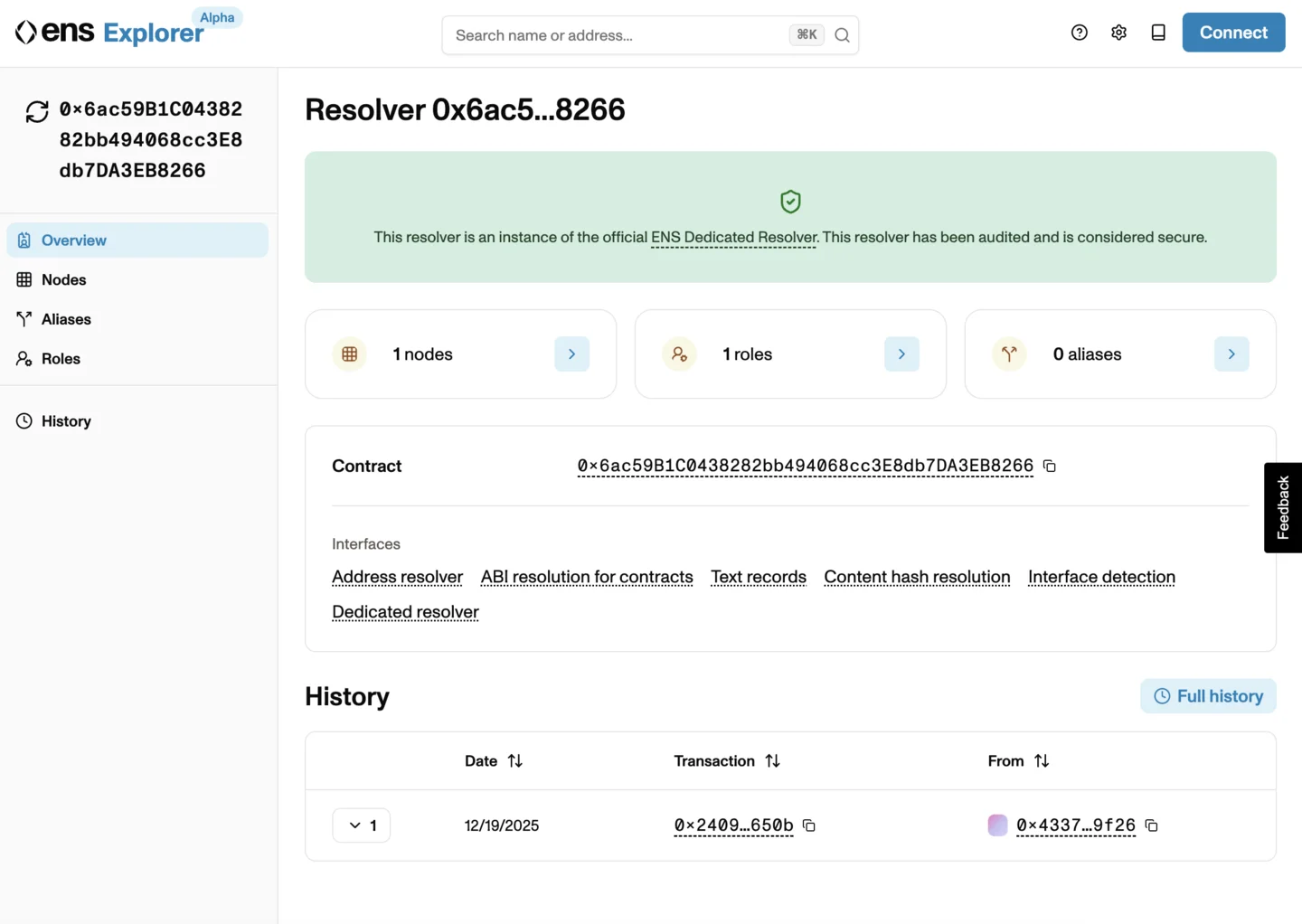
The Explorer gives them a much clearer place in the product.
That matters because resolvers are not just technical plumbing. They shape how names behave.
With dedicated resolver pages, it becomes easier to inspect the records tied to a resolver, understand how a name is being configured, and see more of the relationships behind the scenes. That creates a much better experience for anyone trying to understand how ENS data is actually being served and shared.
It also opens the door to more flexible setups.
One example of that is aliasing, where multiple names can share the same underlying records through a single resolver configuration. In practice, that means you can update one set of records and have those changes reflected across more than one name, instead of managing each name separately.
That is useful for both individuals and teams. A person might want two names to stay in sync without managing them independently. A project might want a cleaner way to keep shared records aligned across multiple names or environments.
That is a small example, but it points to something bigger. ENS names are becoming more configurable, more reusable, and more expressive over time. The Explorer helps make those patterns visible in a way that is much harder to do in a traditional management interface.
The ENS Explorer is useful today, but it becomes even more important as ENSv2 continues to take shape.
ENSv2 introduces a more flexible architecture for how names, registries, and resolvers can work together. That flexibility creates more room for innovation, but it also means there is more happening under the hood that users and builders may want to inspect.
That does not mean every ENS user needs to understand every protocol detail. Most people should not have to.
But it does mean ENS needs a place where those details can be surfaced properly.
As names become more programmable and more structured, it becomes increasingly important to have visibility into things like where control sits, how resolution is happening, what contracts are involved, what data is inherited, delegated, or shared, and how a name fits into a broader hierarchy.
That is where the Explorer becomes especially valuable.
In a simpler system, much of that context can stay hidden. In a more expressive one, hiding too much starts to become a limitation.
The Explorer gives ENS room to grow without forcing every part of the protocol into the same simplified user experience.
It is easy to think of the ENS Explorer as just a tool for developers, but that is too narrow.
There are really a few different kinds of users it serves.
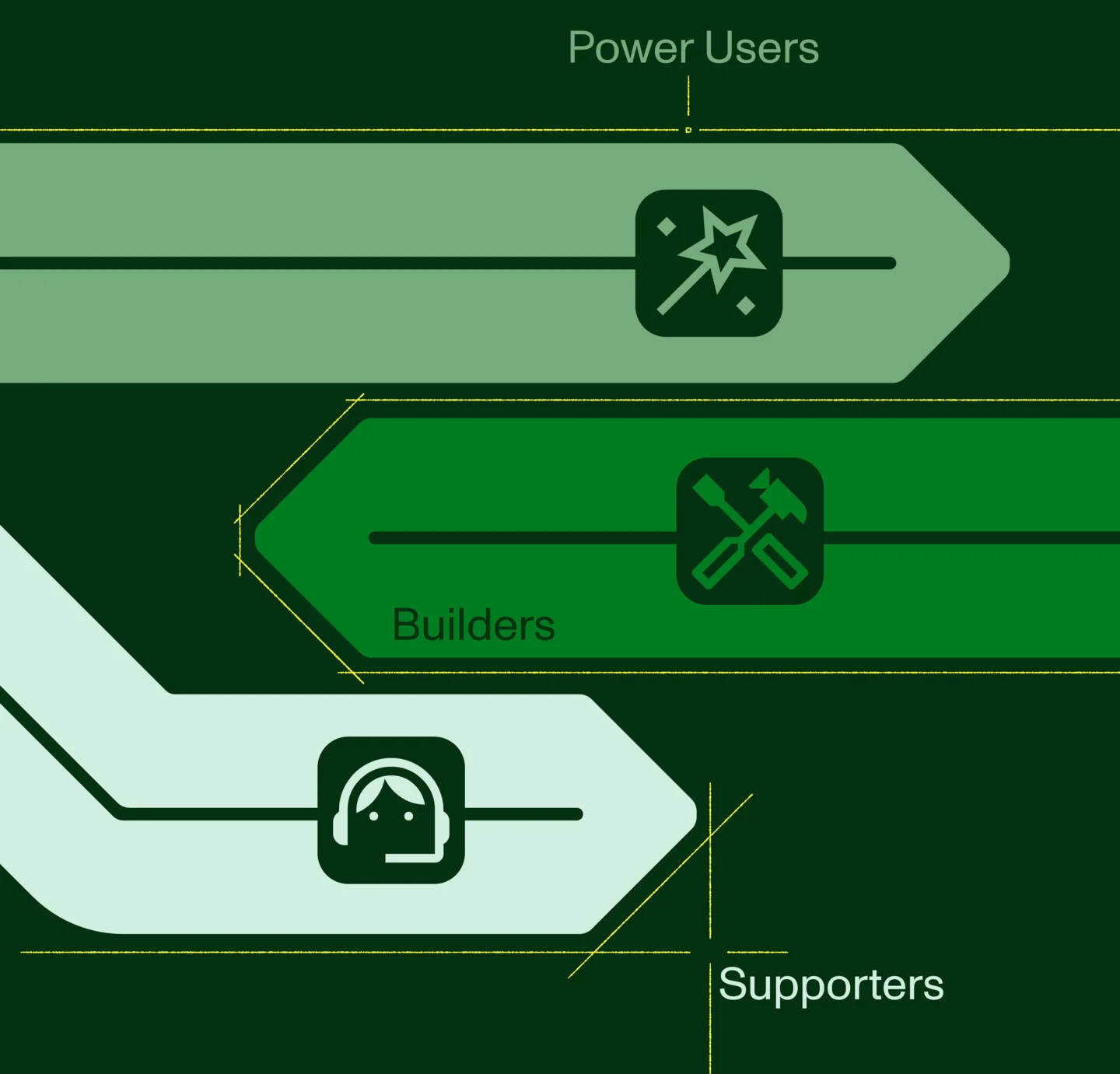
The first is the power user: someone who wants more visibility into how their names are configured, what records are being served, or how a setup behaves over time.
The second is the builder: someone integrating ENS into an application, working with names programmatically, or trying to understand how the protocol behaves in more detail.
And the third is something a little less obvious, but just as important: the supporter.
That might be someone helping another user debug an issue. It might be a team member trying to verify what changed. It might be someone who does not personally understand every protocol detail, but still benefits from having a deeper source of context available when they need it.
That last group matters more than people sometimes realize.
Not everyone needs to interpret every part of the Explorer themselves. But there is real value in knowing the information is there, and that ENS can be inspected in a way that is transparent and grounded in the protocol.
That kind of visibility builds trust.
The ENS Explorer is still early, and that is part of what makes it interesting.
Even in its current form, it already fills an important role inside the ENS product experience. But over time, it has the potential to become much more than a lookup tool or debugging surface.
One of the most promising directions is around contract views.
Today, many developers learn how onchain systems work by clicking through block explorers like Etherscan. That approach is useful, but it also has limits. General-purpose explorers do not always understand the context of a specific protocol, and ENS is a good example of that.
ENS contracts are powerful, but they can also be difficult to interpret without more guidance. Inputs may need to be encoded in specific ways. Relationships between contracts may not be obvious. What a function is doing may only make sense if you already understand how ENS is structured.
The Explorer could help close that gap.
A lot of developers still learn by clicking through Etherscan, reading functions, and piecing things together as they go. That works, up to a point. But ENS is not always easy to understand in a general-purpose explorer, because so much of the useful context is specific to ENS itself.
Over time, the Explorer could make that much easier. Not by replacing docs, but by giving developers a better place to inspect contracts, understand what they are looking at, and learn how ENS works from the interface itself.
That is where the Explorer starts to become more than just a place to look up names. It becomes part of how ENS is explored, learned, and built on.
ENS does not need one interface that tries to do everything. It needs different surfaces for different jobs, and the Explorer fills an important one. As ENS gets more flexible and more expressive, that kind of visibility will only become more useful.